Food & Sake— all
What to Eat in Tohoku: The 12 Dishes That Define the Region
May 17, 2026
Tohoku's food is the most distinct in Japan — shaped by altitude, cold, and isolation. These are the 12 dishes that define the region.
Japanese food culture is not monolithic. Each region has developed its own dishes, ingredients, and traditions shaped by what the land and climate produce. Tohoku's food is arguably Japan's most distinct — shaped by altitude, extreme cold, mountain isolation, and the Sea of Japan on one side and the Pacific on the other. The result is a food culture that rewards eating outside of cities and outside of tourist areas.
These are the twelve dishes that define eating in Tohoku. Some require specific places or seasons. All are worth seeking out.
1. Kiritanpo (Akita)
Mashed rice formed around bamboo skewers and toasted over charcoal until the surface crisps. Served in a hot pot (kiritanpo nabe) with chicken, burdock root, mitsuba, and konnyaku in a golden chicken stock. It is a winter dish. It is best eaten in Akita, at a restaurant that makes its own kiritanpo rather than using commercially produced versions. The texture — crisped outside, soft inside, saturated with broth — is specific to this dish. Nothing else achieves it.
2. Gyutan (Sendai, Miyagi)
Beef tongue, charcoal-grilled and sliced thin, served with barley rice (mugimeshi), oxtail soup, and pickled vegetables. The beef tongue tradition began in Sendai in 1948 and has since become the defining food of the city. The texture — tender but with resistance — and the slightly charred, mineral flavour is unlike beef tongue prepared any other way. Rikyu and Kisuke in Sendai are the two most respected establishments.
3. Wanko Soba (Morioka, Iwate)
Relay-service soba in small bowls. You sit at a counter, receive your first small bowl of soba in dashi broth, finish it, and the server immediately refills it. This continues until you put the lid on the bowl. The Morioka record is over 500 bowls in one sitting. A normal completion is 50–100. The soba itself is ordinary; the experience — the rhythm, the community of it, the decision of when to stop — is unlike any other eating experience in Japan.
Food & Sake
Morioka's Three Noodles: The City That Settled the Carb Debate
Three noodle dishes. One small city. Morioka has more interesting food culture per capita than anywhere else in Japan.
4. Morioka Reimen (Morioka, Iwate)
Cold buckwheat-starch noodles (not soba) in a clear beef broth, served cold, with kimchi, cucumber, a half egg, and — in summer — a slice of watermelon. Developed by Korean-Japanese immigrants in Morioka in the 1950s. The combination of cold noodles in cold broth with the sweetness of watermelon against the sharpness of kimchi is counterintuitive and excellent. Served year-round at Pyon Pyon Sha near Morioka Station.
5. Jaja-men (Morioka, Iwate)
Hand-kneaded wheat noodles served with a fermented miso paste (niku miso), cucumber, and ginger. The noodles are mixed tableside with the paste until everything is incorporated. When the noodles are nearly finished, you request a raw egg and ladle of hot broth from the kitchen — poured over the remaining paste, it creates a second dish (called chatanmen) of egg-drop soup. A complete meal in two acts. Best at Jaja Jaja or Shoten in Morioka.
6. Imoni (Yamagata)
A taro root stew cooked in enormous quantities outdoors in autumn — most commonly on the banks of the Mogami River on autumn weekends. Ingredients: taro, beef (in the Yamagata inland style) or pork (in the coastal style), konnyaku, burdock, sake, soy sauce. Communities gather to cook it together, each group with their own enormous cauldron. Joining one of these gatherings as a visitor requires only showing up — the prevailing spirit is inclusive.
7. Hatahata (Akita)
A small, gelatinous fish that arrives on the Akita coast in November. It is used in everything: grilled over charcoal, simmered in sake and soy, fermented into shottsuru (a pungent fish sauce), or pressed into sushi. The shottsuru fish sauce is specific to Akita — its intensity makes Thai nam pla seem restrained. Dishes cooked in shottsuru have a depth that no other flavouring produces.
8. Senbei Jiru (Aomori)
A hot pot made with wheat flour crackers (nanbu senbei) that absorb the broth and become tender. Ingredients: chicken, burdock, mushrooms, carrot, green onions. Specific to the Hachinohe area of southern Aomori. The crackers were originally made from wheat grown in the region and developed as a way to add substance to a hot pot without rice. Now considered one of Japan's "B-class gourmet" dishes — defined by Aomori identity.
9. Fukushima Peach
Not a prepared dish — a fruit. Fukushima Prefecture produces Japan's most celebrated peaches (momo), with the area around Fukushima city accounting for a disproportionate share of national production. The fruit, available from late July to September, is grown for sweetness and texture rather than appearance. Eating a Fukushima peach in season — at a roadside stand, over the sink — is one of the best food experiences Japan offers.
10. Zunda Mochi (Miyagi)
Rice cakes (mochi) covered in a sweet paste made from edamame (young green soybeans). The paste is bright green, slightly sweet, and specifically nutty in a way that processed sweet bean paste is not. A specialty of Miyagi but available throughout Tohoku. Best at traditional confectionery shops in Sendai; also sold at every shinkansen station as a take-home item, where its quality ranges from excellent to forgettable.
11. Gyokai Tsukemen (Sendai, Miyagi)
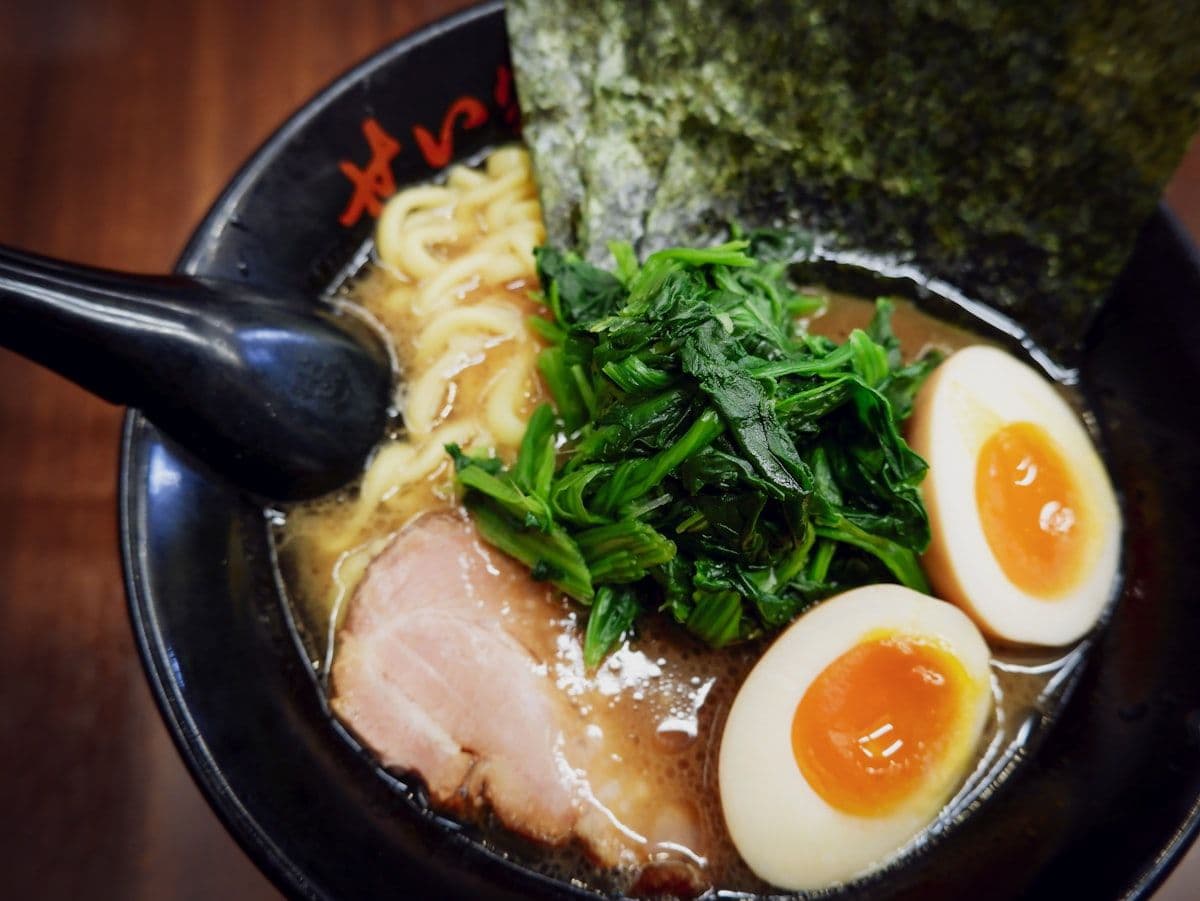
Dipping ramen — thick noodles served separately from an intensely concentrated broth (tsuyu) made from fish and shellfish. The seafood base is specific to the Tohoku style, drawing on the Pacific coast's abundance of katsuobushi, niboshi, and shellfish. Dip the noodles, eat, repeat. Sendai has several highly regarded tsukemen specialists worth queuing for.
12. Nambu Tekki-cooked Everything (Iwate)
Less a dish than a cooking context. Nambu ironware — cast iron cookware produced in Morioka since the 17th century — is used throughout Iwate for grilling, frying, and simmering. Food cooked in cast iron develops a particular crust and retains heat differently than food cooked in modern pans. A dinner at a traditional Morioka izakaya, where the food arrives in iron pans still sizzling, is its own argument for the material.